18/05/2026
People’s safety is our cornerstone – how do we ensure health and safety at the Pali Centre in Kutno?
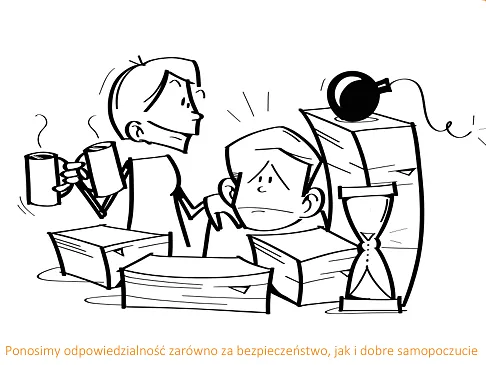
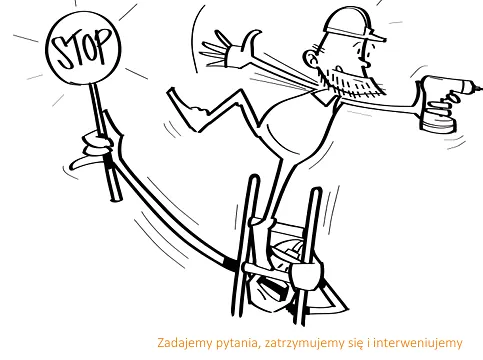
Safety when working with precast concrete elements is not just a theory – it involves decisions made every day on the production floor and on site. At Centrum Pali in Kutno, we treat health and safety as a practical tool for protecting people, rather than a set of entries in a logbook. Every situation, from operating a crane to transporting precast elements, demonstrates just how important the team’s preparation and awareness are. Find out how we build a culture of safety in practice.
How do we approach health and safety at the Pali Centre in Kutno?
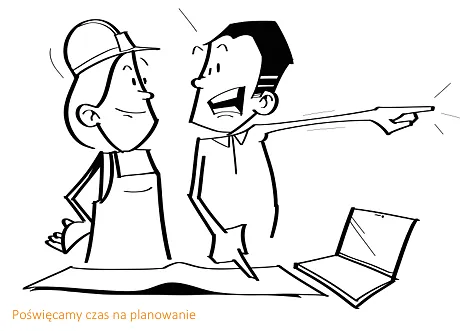
The production of precast foundation piles always begins with people – with their experience, concentration and sense of safety. At the Kutno Pile Centre, safety is not just a formality to be ‘ticked off’ or an add-on to day-to-day work, but a prerequisite for starting and continuing work. We regularly hold:
- health and safety meetings and team briefings,
- discussions on hazards and best practices,
- consultations with staff on improvements to workstations.
Cranes are only started up once the operator is certain that the work area is secure and the team is aware of the scope of the work. The production of precast piles, storage and transport is an environment where errors do not stem from a lack of knowledge, but often from routine. That is why we are consciously building a work culture in which every employee responds to, reports and rectifies potential hazards as they arise.
Modern equipment and above-standard safety measures
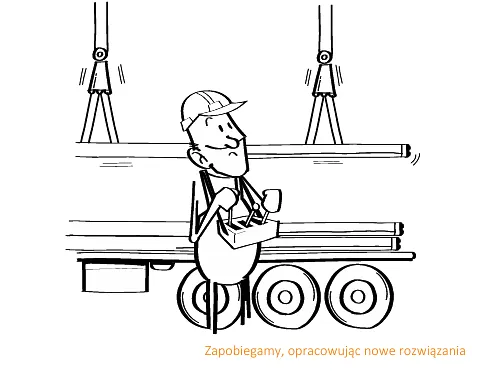
Safety starts with the right tools. At Centrum Pali, we use additional safety equipment that often goes beyond the minimum requirements, as the working environment involving precast concrete elements demands extra safeguards. We ensure, amongst other things:
- high-quality workwear and personal protective equipment,
- appropriate safety measures when working with overhead cranes and precast concrete elements,
- ergonomic design of production and storage workstations,
- regular inspections of equipment and material handling machinery.
We analyse every workstation as if a member of our team were working there for the first time. We look for potential risks and eliminate them before they become a problem.
Every one of our employees puts health and safety principles into practice
Safety requires simple and clear rules, which is why at Centrum Pali every employee:
- knows the scope of their duties,
- knows how to act in standard and emergency situations,
- has access to up-to-date instructions and guidelines.
There is no room for guesswork or improvisation where reaction time and people’s safety are paramount. Working on the production of concrete foundation piles or reinforcement cages is no ‘walk in the park’, but rather a series of technical processes and tasks that demand the utmost attention and awareness of how to act in specific situations. Our staff practise ‘active health and safety’ and do not underestimate even the smallest risks.
Safety campaigns and initiatives
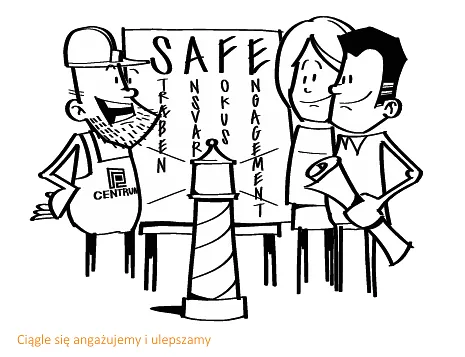
We do not limit ourselves solely to compulsory training. We regularly organise internal campaigns and initiatives aimed at raising awareness of risks and promoting good practices.
These include:
- information campaigns,
- seasonal reminders (e.g. working in adverse weather conditions),
- in-house campaigns such as ‘safe work is everyone’s business’.
As a result, health and safety is not just theory, but a daily habit.
Safe people = reliable projects
The production of concrete piles forms the foundation of many construction projects. We start with the most important foundation of all — people’s safety. At the Kutno Pile Centre, we combine experience, modern technologies and a responsible approach to work to ensure that every stage – from production, through the warehouse, to logistics – is carried out in accordance with the highest standards.
Because we know that a well-protected team means a stable and reliable company.
Key information: health and safety in the production of precast piles
Health and safety in the production of concrete piles has a direct impact on the continuity of project delivery and the minimisation of downtime.
A health and safety culture based on employees’ experience enhances the effectiveness of procedures and reduces the risk of operational errors.
Modern equipment and regular inspections minimise the risks associated with handling heavy precast elements.
Clear procedures and an understanding of responsibilities shorten response times in emergency situations.
Ongoing educational activities and internal initiatives help to reinforce safe working habits in day-to-day operations.
FAQ
1. What are the risks involved in the production of precast concrete blocks?
These most commonly relate to working with heavy concrete elements, operating overhead cranes and internal transport. The risks are mitigated through procedures, training and appropriate workplace safeguards.
2. How often should health and safety training be carried out in this type of facility?
Periodic training takes place in accordance with regulations, but in practice, regular briefings and ongoing reminders are key. Daily communication within the team enhances the effectiveness of standard training.
3. Why is a health and safety culture more important than the procedures themselves?
Procedures set out the rules, but it is employees’ habits that determine whether they are followed. A safety-conscious team identifies hazards more quickly and reacts before an incident occurs.
4. What hazards are present in the production of precast concrete elements?
These most commonly relate to working with heavy concrete elements, operating overhead cranes and internal transport. The risks are mitigated through procedures, training and appropriate workplace safeguards.
5. How often should health and safety training be carried out in this type of facility?
Periodic training takes place in accordance with regulations, but in practice, regular briefings and ongoing reminders are key. Daily communication within the team enhances the effectiveness of standard training.
6. Why is a culture of health and safety more important than the procedures themselves?
Procedures set out the rules, but it is the employees’ habits that determine whether they are followed. A safety-conscious team identifies hazards more quickly and takes action before an incident occurs.